
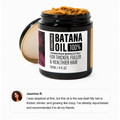

If you only remember one thing, remember this.
Batana oil is best positioned as a rich, traditional-feeling hair and scalp oil for nourishment, softness, shine, dryness, frizz, and breakage-prone routines — not as a medical hair-loss treatment.
Batana oil has become one of the loudest hair-care trends online. Some people call it “liquid gold.” Others are skeptical because the category is now crowded with fake-looking jars, vague origin stories, and aggressive claims that sound too good to be true.
For ItsHairWeGrow, the stronger angle is not hype. It is clarity. Customers do not just need another oil. They need to understand what real Batana oil should look like, how it fits into their routine, what results are realistic, and how to avoid buying a diluted imitation.
What is Batana oil?
Batana oil is a traditional oil associated with Honduras and the Miskito people. It is commonly used in hair-care routines for dry strands, scalp massage, shine, softness, and a richer conditioning feel. In its authentic form, Batana oil is usually thick, rich, earthy, and naturally brown-toned.
The reason people are drawn to it is simple: it feels different from lightweight cosmetic oils. For textured, dry, curly, coily, or over-styled hair, a richer oil can make a routine feel more nourishing and more intentional.
What Batana oil can realistically help with
Batana oil is not magic. But used consistently, it can support the parts of your routine that matter most for healthier-looking hair:
- Dryness: adds a richer oil step for strands that feel rough, brittle, or dull.
- Shine: helps hair look smoother, glossier, and more cared for.
- Breakage-prone routines: moisturised-feeling hair is often easier to manage gently.
- Scalp comfort: can be used sparingly as part of a massage ritual for dry-feeling areas.
- Edges care: can support a gentle routine around fragile-looking edges when used lightly.
- Protective styles: useful for scalp lines, braids, twists, wigs, and leave-out areas when moisture is needed.
What to avoid when shopping for Batana oil
The Batana category now has a trust problem. Some products are diluted, fragranced, coloured, whipped beyond recognition, or sold with no clear proof of origin. The cheapest jar is not always the best deal if it weakens the routine you are trying to build.
Before you buy, ask: is it single-ingredient? Does the brand show origin proof? Does the texture and colour look realistic? Are the instructions clear? Does the brand explain the limits of the product, or does it only make miracle claims?
How to use Batana oil
The best routine depends on your hair type. Start small. Batana oil is rich, so over-applying can make fine hair feel heavy.
- Pre-wash mask: apply to dry strands for 30–60 minutes before shampoo.
- Scalp massage: warm a small amount between fingers and massage into dry-feeling areas.
- Edges routine: apply a light amount around edges after avoiding tension-heavy styling.
- Protective styles: use lightly on scalp lines, braids, twists, or leave-out areas.
- Ends and shine: use a tiny amount through mids and ends when hair looks dull.
Who should use it?
Batana oil is best suited to people who want a richer hair-care ritual, especially if their hair is dry, thick, textured, coily, curly, chemically treated, heat-styled, protective-styled, or prone to roughness and dullness.
If your hair is very fine or your scalp gets oily easily, use it as a pre-wash treatment first rather than applying heavily to the scalp.
How to spot real Batana oil before you waste money.

What are you actually trying to improve?
Dry strands
Use as a pre-wash mask or tiny finishing oil to help hair feel softer and look shinier.
Edges care
Use lightly around edges as part of a gentle routine. Avoid tight, high-tension styles.
Scalp ritual
Massage a small amount into dry-feeling areas to make scalp care feel more consistent.
Protective styles
Use on scalp lines, braids, twists, wigs, or leave-out areas when moisture is needed.
Dullness
A small amount through mids and ends can help hair look glossier and more cared for.
Breakage-prone hair
Moisture and manageability can support a gentler routine for fragile-looking strands.
ItsHairWeGrow vs generic Batana oil.
| What matters | ItsHairWeGrow | Generic marketplace oil | Perfumed blend oil |
|---|---|---|---|
| 100% unrefined Batana oil focus | ✓ | ? | × |
| Authenticity-led proof story | ✓ | ? | ? |
| Clear usage education | ✓ | × | × |
| Designed for scalp, edges, strands, protective styles | ✓ | ? | ? |
| No filler-heavy fragrance positioning | ✓ | ? | × |
What to expect with consistent use.
Softer feel
Hair may feel more conditioned, coated, and easier to smooth.
Better routine
You learn how much oil your hair actually needs without over-applying.
More shine
With consistent use, strands may look glossier and less dry-looking.
Healthier habits
Best paired with gentle styling, wash-day consistency, and scalp care.
Results vary by hair type, styling habits, damage level, routine, and consistency. Cosmetic product only.
The 4 ways to use Batana oil.

Why customers need to see the proof, not just read the promise.

Customers in this category are skeptical. They have seen too many “miracle oil” ads. A stronger content strategy is to show the proof stack: authenticity, ingredients, usage, realistic expectations, review context, and the product routine.
Do not buy Batana oil because it is trending. Buy it because it fits your routine.
If your hair needs a richer nourishment step, if your edges need gentler care, if your protective styles need scalp moisture, or if your wash-day routine feels incomplete, 100% unrefined Batana oil is a strong place to start.


